Where to Stake Solana in 2026: The Complete Guide to Every Method
Where to Stake Solana in 2026: The Complete Guide to Every Method
CrisCoin 10 min readSolana
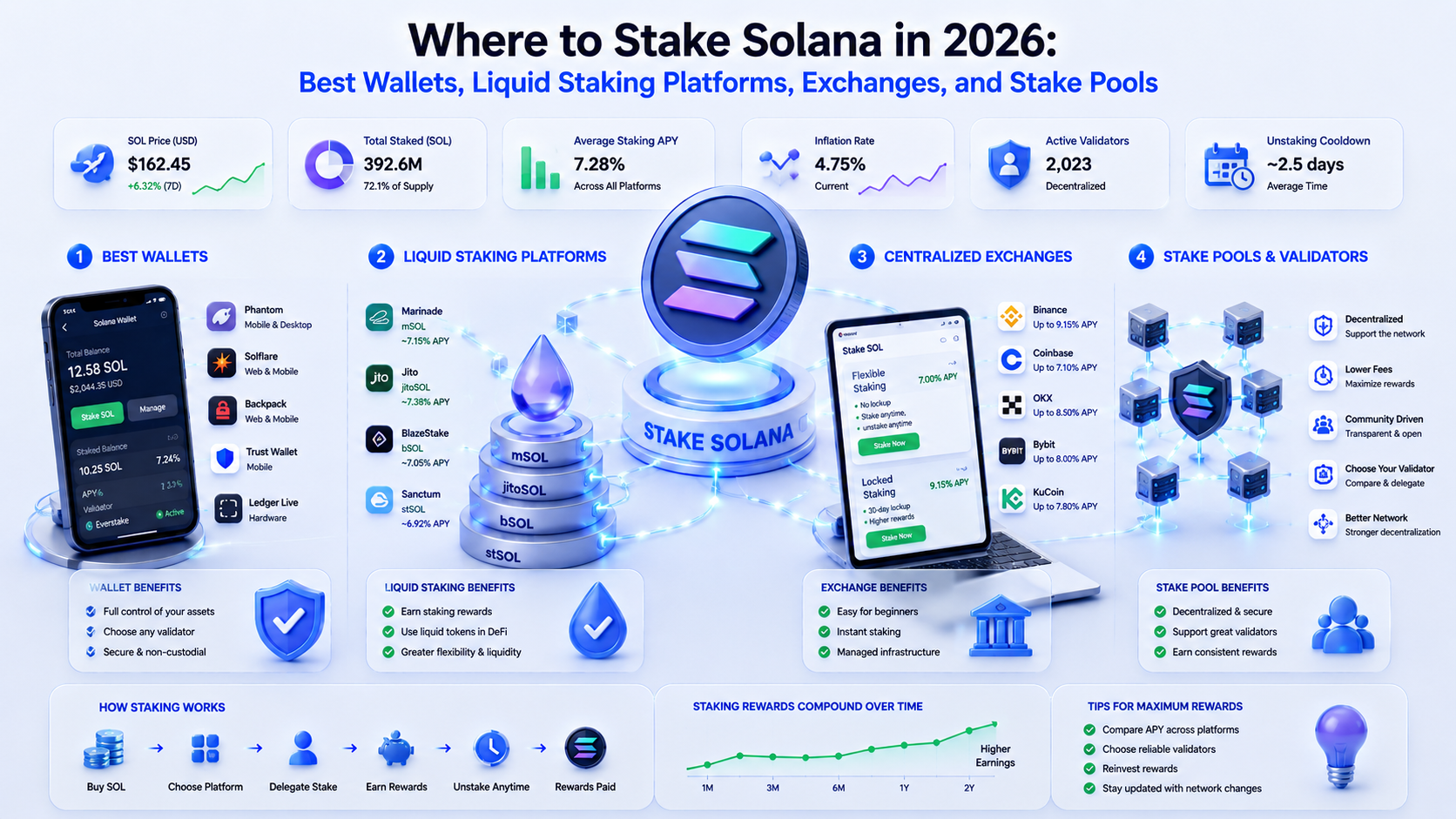
You can stake Solana through a self-custody wallet, a liquid staking protocol, a centralized exchange, or a stake pool.
The best option depends on whether you prioritize yield, liquidity, simplicity, or full control of your SOL. Unlike Ethereum, Solana does not require a minimum staking amount, and native staking does not impose a fixed lockup period.
What Is Solana Staking?
Solana staking is the process of delegating SOL to a validator that participates in network consensus and earns staking rewards. Validators process transactions, vote on blocks, and help secure the network. Delegators receive a portion of staking rewards after validator commissions are deducted.
Key Staking Characteristics
Solana uses Proof of Stake (PoS)
Delegators retain ownership of their SOL during native staking
Rewards are distributed every epoch
Native unstaking typically requires one epoch, approximately 2-3 days
There is no minimum staking requirement
How Does Solana Staking Generate Rewards?
Solana staking rewards come from inflation emissions and validator participation in network consensus. The network issues new SOL through inflation, validators earn rewards for consensus participation, and validators distribute rewards to delegators after commissions reduce the distributed amount.
Some validators also earn MEV rewards through transaction prioritization. Protocols such as Jito share a portion of these rewards with stakers, which can increase total yield.
What Are the Four Ways to Stake Solana?
Every Solana staking platform falls into one of four categories.
Staking Method
Custody
Liquidity
Exit Speed
Best For
Native Wallet Staking
Self-custody
No
2-3 days
Long-term holders
Liquid Staking
Self-custody
Yes
Instant swap
DeFi users
Centralized Exchange
Custodial
Limited
Platform dependent
Beginners
Stake Pool
Self-custody
Depends on design
Varies
Diversification
Each model creates different tradeoffs between yield, control, and flexibility.
Where Should Long-Term Holders Stake Solana?
Native wallet staking is usually the best choice for long-term holders. Native delegation keeps SOL under your control and avoids additional protocol-layer fees. Popular wallet options include Phantom and Solflare.
Benefits of Native Staking
Maintains self-custody
Avoids smart contract risk
Allows validator selection
Pays rewards directly from delegated stake
The primary limitation is liquidity. Staked SOL cannot be traded until the deactivation period finishes.
Which Validator Should You Choose?
Validator selection directly affects rewards and network decentralization.
Metric
Why It Matters
Commission Rate
Affects net APY
Uptime
Determines reward consistency
Voting Performance
Impacts epoch rewards
Stake Concentration
Influences decentralization
Reputation
Reduces operational risk
Many stakers focus only on commission rates, but network health also matters. Delegating to smaller high-performance validators often improves decentralization compared with concentrating stake among the largest validators. Tools such as Solana Compass help compare validator performance and decentralization metrics.
A lower commission generally increases long-term returns, assuming validator performance remains strong.
What Happens If a Validator Goes Offline?
Validator downtime reduces staking rewards. An offline validator misses voting opportunities, earns fewer rewards, and passes fewer rewards to delegators. Most stakers do not lose their SOL because a validator experiences downtime — the more common outcome is reduced yield.
Slashing Note: Solana historically applies limited slashing compared with some Proof-of-Stake networks. Most staking risks involve reduced rewards from downtime and underperformance rather than principal loss, though stakers should still monitor network updates since slashing rules can evolve.
What Are Stake Pools?
Stake pools automatically distribute delegated stake across multiple validators.
Benefits of Stake Pools
Diversification
Reduced reliance on one validator
Automatic rebalancing
Simplified management
Stake pools help users avoid researching individual validators while maintaining exposure across a broader validator set.
Is Liquid Staking Better Than Native Staking?
Liquid staking is better for users who want liquidity while earning rewards. Native staking is better for users who prioritize simplicity and lower risk. Liquid staking converts staked SOL into a liquid staking token (LST), which remains tradeable and usable in DeFi applications.
What Are the Best Solana Liquid Staking Tokens?
Token
Provider
Approx APY
Primary Advantage
JitoSOL
Jito
7.5-8.5%
MEV reward sharing
mSOL
Marinade
6.0-6.1%
Broad validator diversification
JupSOL
Jupiter/Sanctum
8-9%*
Deep ecosystem integration
bSOL
BlazeStake
~6%
Auto-compounding
*Yield may include temporary incentives or commission subsidies.
Why Does JitoSOL Often Earn Higher APY?
JitoSOL earns additional rewards through MEV capture. Validators use Jito infrastructure, transaction ordering creates MEV opportunities, the value is collected, and a portion is distributed to stakers. This model can add approximately 0.5%-1% above base staking rewards.
What Risks Does Liquid Staking Introduce?
Major Risks: Smart contract vulnerabilities, liquidity shortages during market stress, temporary token depegs, and protocol governance risk. Users should prioritize audited and established protocols with strong track records.
Where Should Beginners Stake Solana?
Centralized exchanges provide the simplest staking experience. Popular options include Coinbase, Kraken, and Bybit.
Exchanges stake SOL on behalf of users and retain a portion of rewards as fees.
Which Solana Staking Method Pays the Highest Yield?
Yield depends on validator performance, MEV rewards, and protocol incentives.
Method
Typical APY Range
Native Staking
6-8%
JitoSOL
7.5-8.5%
mSOL
6-6.1%
Exchange Staking
Usually lower than native staking
Temporary incentive programs can increase yields but may not remain permanent.
Is Solana Staking Taxable?
Tax treatment depends on jurisdiction. In many regions, receiving staking rewards may create taxable income, selling liquid staking tokens may trigger capital gains events, and swapping an LST for SOL may also create taxable events. Consult a qualified tax professional regarding local regulations.
Is Staking Solana Worth It in 2026?
Staking generally benefits long-term SOL holders. Solana inflation remains above its long-term target, unstaked holders experience dilution relative to stakers, and staking increases SOL holdings over time even as future inflation reductions may lower yields.
Best Solana Staking Platforms by Goal
Maximum Control: Phantom + native validator
Highest Sustainable Yield: JitoSOL
DeFi Participation: JitoSOL or mSOL
Beginner Simplicity: Coinbase or Kraken
Validator Diversification: Marinade or stake pools
Fastest Exit: Liquid staking token
Lowest Additional Risk: Native staking
Choosing based on your objective produces better results than selecting the highest advertised APY.
Frequently Asked Questions
The best place depends on your goal. Native wallet staking suits long-term holders, liquid staking suits DeFi users, and exchanges suit beginners seeking simplicity.
No. Solana does not require a minimum staking amount for delegation.
Native staking delegates SOL directly to validators. Liquid staking issues a tradeable token representing your staked position.
JitoSOL and mSOL remain among the most widely used liquid staking tokens in the Solana ecosystem.
Yes, during native delegation and self-custodial liquid staking. Exchange staking transfers custody to the platform.
Yes. Reward rates vary according to inflation emissions, validator performance, network participation, and MEV activity.