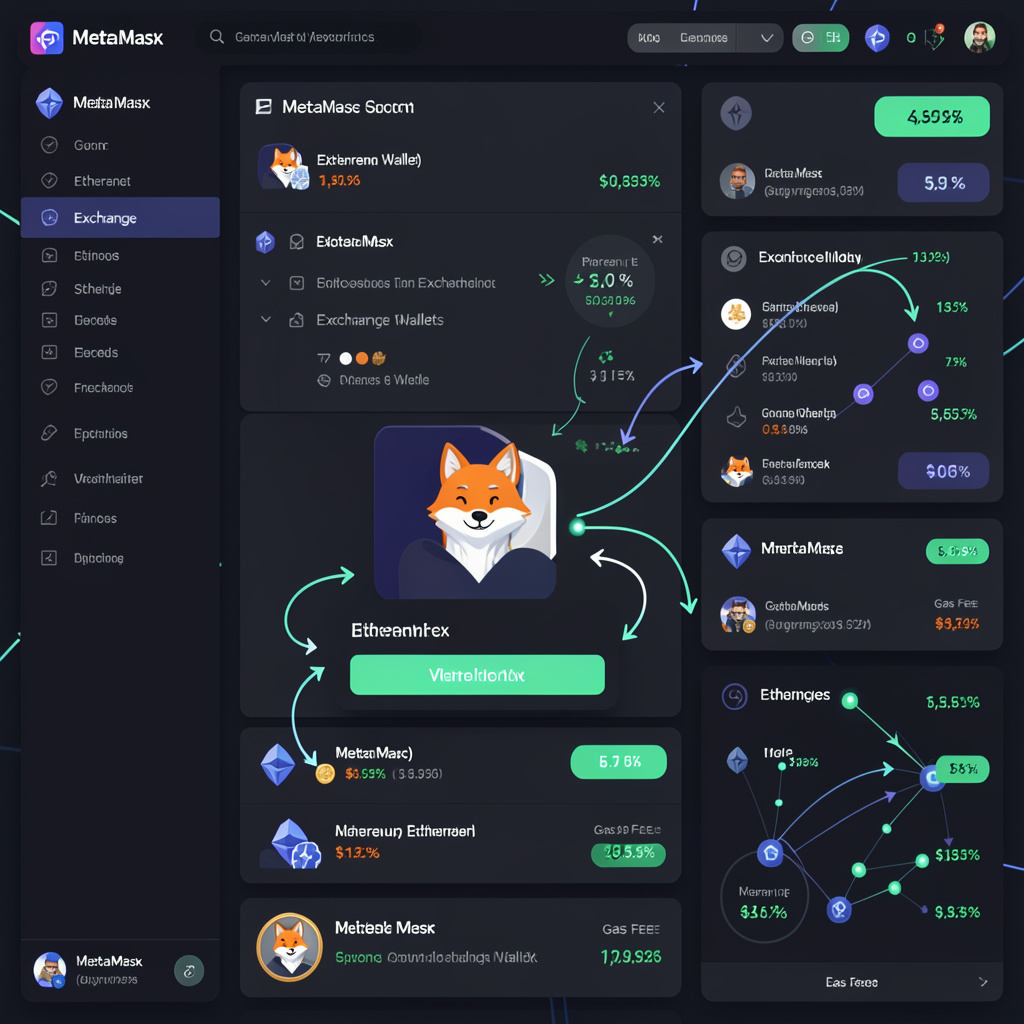
Withdrawing crypto from MetaMask means sending digital assets from your wallet to another wallet or exchange using a blockchain network.
Follow these steps:
- Open MetaMask Wallet
- Select asset (ETH, BNB, or token)
- Click “Send”
- Enter recipient wallet address
- Input amount
- Adjust gas fees
- Confirm transaction
- MetaMask → signs transaction
- Blockchain → processes transfer
- Receiver → accepts funds
MetaMask broadcasts the transaction to the blockchain network
Which cryptocurrencies can you withdraw from MetaMask?
MetaMask supports Ethereum-based and EVM-compatible assets.
Supported assets
- Ethereum → ETH, ERC-20 tokens
- Binance Smart Chain → BNB, BEP-20 tokens
- Polygon → MATIC, ERC-20 tokens
| Network | Native Token | Token Standard | Example |
| Ethereum | ETH | ERC-20 | USDC |
| BSC | BNB | BEP-20 | BUSD |
| Polygon | MATIC | ERC-20 | QUICK |
Each network requires matching wallet addresses and native tokens for fees.
How do you withdraw crypto from MetaMask step by step?
You withdraw by sending crypto to your exchange deposit address.
Step-by-step process
Process:
- Open Coinbase or Binance
- Generate deposit address (ETH, BNB, or Polygon)
- Copy wallet address
- Paste into MetaMask “Send” field
- Confirm transaction
Exchanges credit funds after network confirmations.
What are gas fees in MetaMask withdrawals?
Gas fees represent transaction costs paid to blockchain validators.
Key facts:
- Ethereum gas fees fluctuate based on congestion
- Binance Smart Chain fees remain lower on average
- Polygon fees remain minimal (often <$0.01)
MetaMask displays estimated fees before confirmation.
How do you withdraw from MetaMask to Coinbase, Binance, or Kraken?
You withdraw by using your exchange deposit address and matching the correct network.
Exchange withdrawal steps
- Coinbase → copy ETH deposit address
- Binance → select network (ERC-20/BEP-20)
- Kraken → verify supported networks
Rules:
- Match network exactly
- Confirm address format
- Check minimum deposit
What fees do you pay when withdrawing from MetaMask?
You pay network gas fees, not MetaMask platform fees.
Fee details
- Ethereum → paid in ETH
- BSC → paid in BNB
- Polygon → paid in MATIC
| Network | Typical Fee Range |
| Ethereum | $2–$50 |
| BSC | <$1 |
| Polygon | <$0.10 |
What happens after you confirm a MetaMask withdrawal?
MetaMask signs and broadcasts the transaction using your private key.
Process outcome:
- Blockchain validates transaction
- Network confirms block inclusion
- Recipient wallet receives funds
You can track status via transaction hash on Etherscan or BscScan.
How do private keys and seed phrases affect withdrawals?
Private keys and seed phrases control wallet ownership.
Security rules:
- Private key signs transactions
- Seed phrase restores wallet access
- Never share private key or seed phrase
Unauthorized access leads to irreversible fund loss.
What common errors happen during MetaMask withdrawals?
Errors occur due to incorrect networks, low gas, or wrong addresses.
Common issues
- Sending ETH to wrong network (e.g., BSC instead of Ethereum)
- Insufficient gas fees
- Invalid wallet address
- Token not supported by recipient exchange
How do you track a MetaMask withdrawal transaction?
You track withdrawals using blockchain explorers with a transaction hash (TXID).
Tracking tools
- Ethereum → Etherscan
- BSC → BscScan
- Polygon → Polygonscan
Steps:
- Copy TXID
- Paste into explorer
- Check status
What is the difference between withdrawing and bridging in MetaMask?
Withdrawal sends assets externally; bridging transfers assets across networks.
Key differences
- Withdrawal → MetaMask to exchange/wallet
- Bridge → Ethereum to Polygon/BSC
Example:
- Withdraw ETH → Binance
- Bridge ETH → Polygon
What are best practices for safe MetaMask withdrawals?
Safe withdrawals depend on verification and security discipline.
Pre-withdrawal checklist
- Verify wallet address character-by-character
- Send small test transaction first
- Use correct blockchain network
- Maintain sufficient gas balance
- Store seed phrase offline
You now understand execution and safety. Next, deeper fee optimization and cross-chain bridging can refine withdrawals.