Physical Address
304 North Cardinal St.
Dorchester Center, MA 02124
Physical Address
304 North Cardinal St.
Dorchester Center, MA 02124

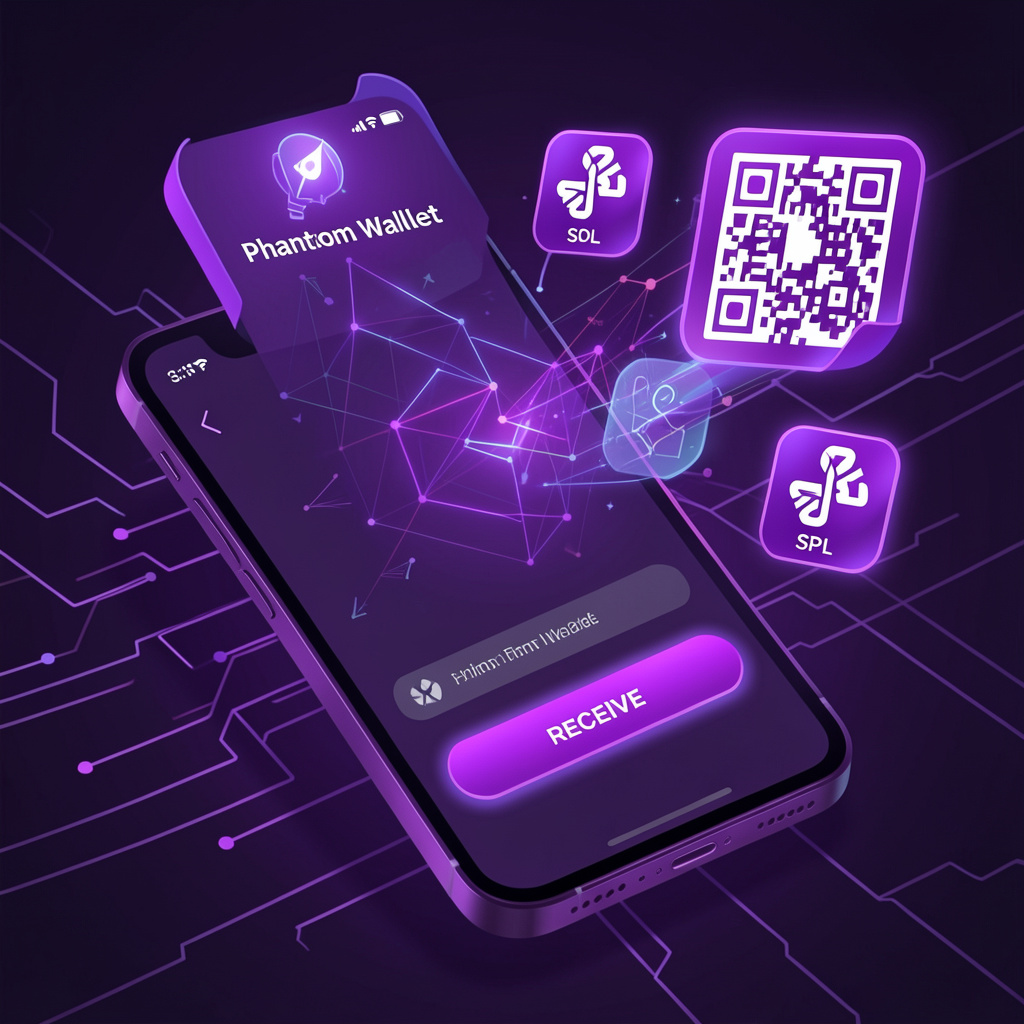
Receiving cryptocurrency in Phantom Wallet requires sharing your wallet address with the sender on the correct blockchain network. Phantom Wallet supports Solana, Ethereum, and Polygon, allowing users to receive tokens, NFTs, and other digital assets securely.
Phantom Wallet enables users to receive Solana-based tokens, ERC-20 assets, and NFTs simply by sharing a wallet address or QR code. This guide explains the step-by-step receiving process, network compatibility rules, transaction verification, and security practices to help users receive crypto safely.
Phantom Wallet is a non-custodial cryptocurrency wallet that stores private keys locally and enables users to send, receive, stake, swap, and manage digital assets across supported blockchain networks.
Phantom Wallet provides direct control of digital assets without relying on centralized exchanges.
| Attribute | Phantom Wallet Value |
|---|---|
| Wallet type | Non-custodial |
| Primary blockchain | Solana |
| Additional networks | Ethereum, Polygon |
| Token standards | SPL, ERC-20 |
| NFT support | Yes |
| Platforms | Browser extension, mobile |
These attributes define Phantom Wallet as a multi-chain non-custodial wallet used for managing digital assets and interacting with decentralized applications.
Phantom Wallet originally focused on the Solana ecosystem, but it now supports additional blockchain networks.
Supported networks include:
Phantom also supports common blockchain token standards such as:
This multi-chain capability allows Phantom users to manage assets from several blockchain ecosystems inside a single wallet.
Phantom Wallet can receive multiple digital asset types depending on the selected network.
| Asset Type | Example | Network |
| SPL Tokens | SOL, USDC (Solana) | Solana |
| ERC-20 Tokens | ETH, USDT | Ethereum |
| NFTs | Solana NFTs | Solana |
For example:
Phantom automatically detects supported tokens associated with the wallet address.
Before receiving cryptocurrency, several conditions must be satisfied to ensure the transfer works correctly.
These steps ensure your wallet address is ready to receive assets.
You receive crypto in Phantom Wallet by copying your public wallet address, selecting the correct blockchain network, and sharing the address with the sender. After blockchain confirmation, the transferred tokens automatically appear in your Phantom Wallet balance.
Receiving cryptocurrency using Phantom Wallet requires only a few simple actions.
Launch Phantom using either:
The wallet dashboard displays your token balances, NFTs, and network selection.
Before receiving assets, choose the network where the transfer will occur.
Phantom allows switching between:
Choosing the correct network ensures the wallet generates the correct receiving address.
Click the Receive button on the wallet interface.
Phantom will automatically display:
Both represent the same receiving address.
Next, copy the wallet address generated by Phantom.
Example structure:
Each network uses a different address format, so always confirm the correct blockchain network.
Provide the wallet address to the sender.
Common methods include:
Once the sender broadcasts the transaction, the blockchain processes it and records it on the network ledger.
You confirm incoming transactions by checking your wallet balance or verifying the transaction on a blockchain explorer.
| Network | Explorer |
| Solana | Solscan.io |
| Ethereum | Etherscan.io |
| Polygon | Polygonscan.com |
To verify a transaction:
Explorers display:
This confirms the blockchain recorded the transfer.
Phantom Wallet supports NFT transfers on Solana and Ethereum networks.
NFTs are transferred using the same wallet address used for cryptocurrency transfers.
Phantom supports NFT frameworks such as:
Once confirmed, NFTs appear automatically in the wallet interface.
Most receiving issues occur due to network mismatches, unsupported tokens, or transaction delays.
Network mismatches occur when the sender uses a different blockchain than the receiver.
Example:
A sender transfers tokens using Ethereum, but the receiver expects a Solana transfer.
Because the networks are different, the wallet cannot display those assets properly.
Sometimes tokens do not appear immediately because Phantom does not automatically detect the token contract.
In these cases users may need to manually add the token.
Transactions may take longer due to network congestion.
For example:
Usually the transaction completes once the network processes it.
A wallet address can receive assets only from the same blockchain network.
Sending tokens from Ethereum to a Solana address creates a network mismatch.
In these situations:
Therefore, always confirm the network compatibility before transferring assets.
Users should follow strong security practices to protect their digital assets.
Recommended practices include:
Phantom Wallet gives users full control of private keys, which also means users are responsible for protecting them.
Many users transfer cryptocurrency from centralized exchanges to Phantom Wallet.
Popular exchanges include:
| Steps | Action |
| Step 1 | Copy Phantom wallet address |
| Step 2 | Open exchange withdrawal page |
| Step 3 | Paste wallet address |
| Step 4 | Select blockchain network |
| Step 5 | Confirm withdrawal |
Once confirmed, the exchange sends the funds to your Phantom wallet. After blockchain confirmation, the assets appear in your wallet balance.
Yes. Phantom Wallet supports multiple assets including:
SOL and SPL tokens
ETH and ERC-20 tokens
Polygon assets
NFTs
Yes. Wallet addresses are public identifiers used to receive cryptocurrency.
However, never share your secret recovery phrase or private keys.
| Network | Typical Time |
| Solana | 5–20 seconds |
| Ethereum | 15 seconds – 5 minutes |
| Polygon | 2–60 seconds |
Transaction times may vary depending on network congestion.
Quick recap:
By following these steps, users can safely receive cryptocurrency, tokens, and NFTs using Phantom Wallet across supported blockchain networks.