Physical Address
304 North Cardinal St.
Dorchester Center, MA 02124
Physical Address
304 North Cardinal St.
Dorchester Center, MA 02124

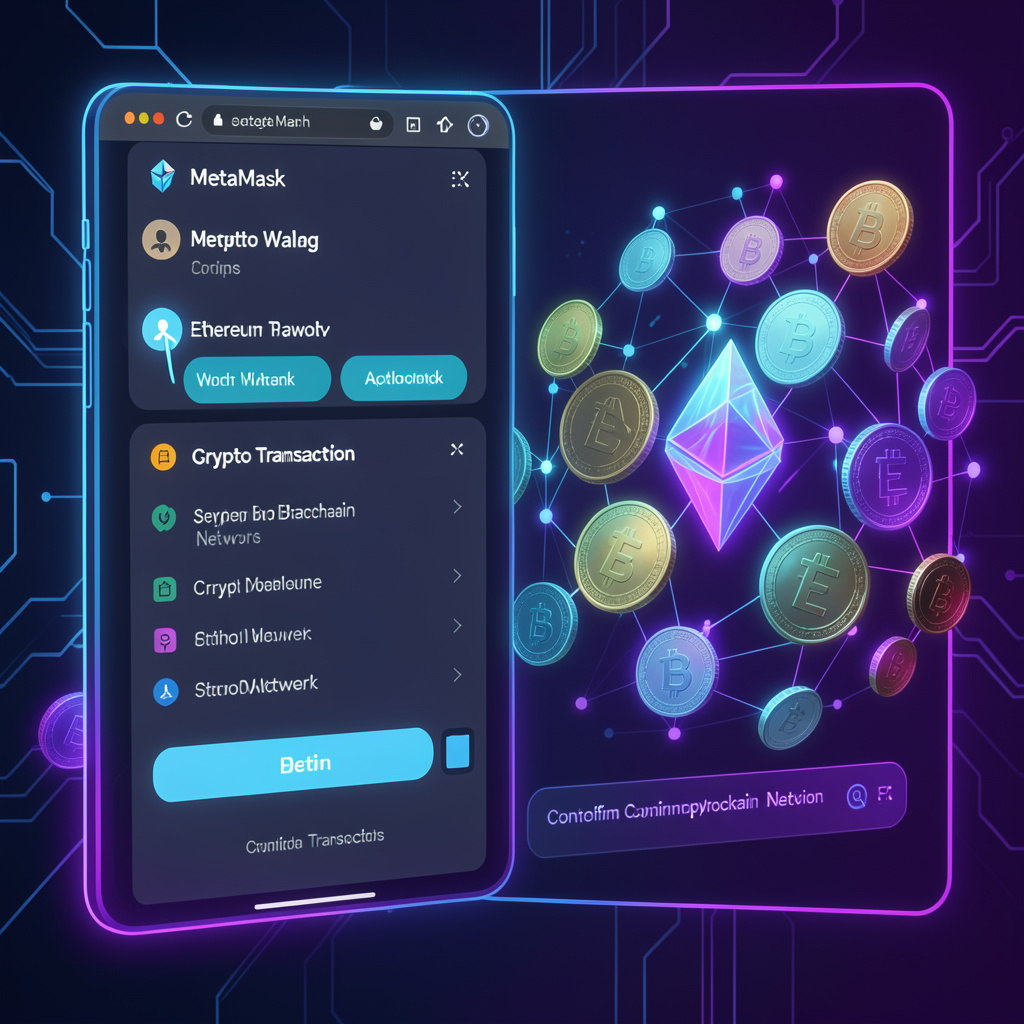
MetaMask sends crypto by signing a transaction with a private key and broadcasting it to a blockchain network. The wallet validates inputs, calculates gas fees, and confirms execution on-chain.
Next, define required conditions
What Conditions Must Exist Before Sending Crypto with MetaMask?
You need balance, correct network, and valid address. MetaMask enforces these constraints before execution.
Incorrect parameters cause failed or irreversible transfers. Next, execute the transaction.
You execute a MetaMask transaction by initiating, configuring, and confirming.
MetaMask displays wallet address, token balances, and active blockchain network.
MetaMask loads transaction input fields for address, asset, amount, and gas configuration.
The address defines the destination. Ethereum addresses start with “0x”. Blockchain transactions remain irreversible after confirmation.
MetaMask calculates total cost = transfer amount + gas fee.
Gas fees include base fee and priority fee.
| Gas Level | Speed | Cost Range |
| Low | Slow | $0.5–$2 |
| Market | Average | $2–$10 |
| Aggressive | Fast | $10+ |
1 Gwei equals 0.000000001 ETH.
MetaMask signs the transaction and broadcasts it to Ethereum nodes for validation.
Next, track the transaction.
You track transactions using blockchain explorers like Etherscan.
Ethereum confirms transactions in ~12–30 seconds under normal load.
Next, understand transaction structure.
A MetaMask transaction contains deterministic fields.
Each component ensures verifiable execution across nodes.
Next, reduce risks.
You reduce risk by enforcing strict security controls.
Chainalysis reports phishing exploits exceeding $300M annually in Web3 ecosystems.
Next, handle errors.
Errors affect execution, cost, or finality.
Fix methods:
Next, explore ERC-20 specifics.
MetaMask sends ERC-20 tokens through smart contract calls.
Example:
Next, consider scaling solutions.
Layer 2 networks reduce transaction cost and increase throughput.
MetaMask enables direct network switching.
Next, test safely.
MetaMask testnets simulate blockchain transactions without real value.
Testnets replicate mainnet behavior without financial risk.
Wrong network transfers lock assets unless recovery steps exist.
Always verify the network before sending.
You need enough ETH to cover transfer value and gas fee. ETH transfers require ~21,000 gas. At 20 Gwei and $3,000/ETH, average cost equals ~$1.26.
Yes, you can cancel a pending transaction by sending a new transaction with the same nonce and higher gas fee. Confirmed transactions remain immutable and cannot be reversed.
A MetaMask transaction gets stuck due to low gas fees or network congestion. Validators prioritize higher-fee transactions, delaying low-fee ones in the mempool.
A MetaMask transaction completes within 12–30 seconds on Ethereum under normal conditions. High congestion increases confirmation time to several minutes.
MetaMask is safe if you protect private keys and verify addresses. Security depends on user behavior, not protocol flaws.
Sending crypto to the wrong address results in permanent loss. Blockchain transactions lack reversal mechanisms unless the recipient controls the destination wallet and returns funds.
Yes, ERC-20 transfers require more gas. ETH uses ~21,000 gas, while ERC-20 transfers consume ~50,000–65,000 gas due to smart contract execution.
Yes, MetaMask sends crypto to exchange wallets if you select the correct network and deposit address. Incorrect network selection causes failed deposits or asset loss.
A nonce is a sequential transaction counter per wallet. It ensures transaction order and prevents double-spending on the blockchain.
Recovery depends on wallet control. If you control the private key, you can import it into a compatible network wallet and access funds. Otherwise, recovery is unlikely.
Yes, MetaMask supports Layer 2 networks like Arbitrum, Optimism, and Base. These networks reduce fees by up to 95% and increase transaction throughput.
Yes, you need ETH to pay gas fees even when sending ERC-20 tokens. Tokens do not cover transaction execution costs.